USA_6578
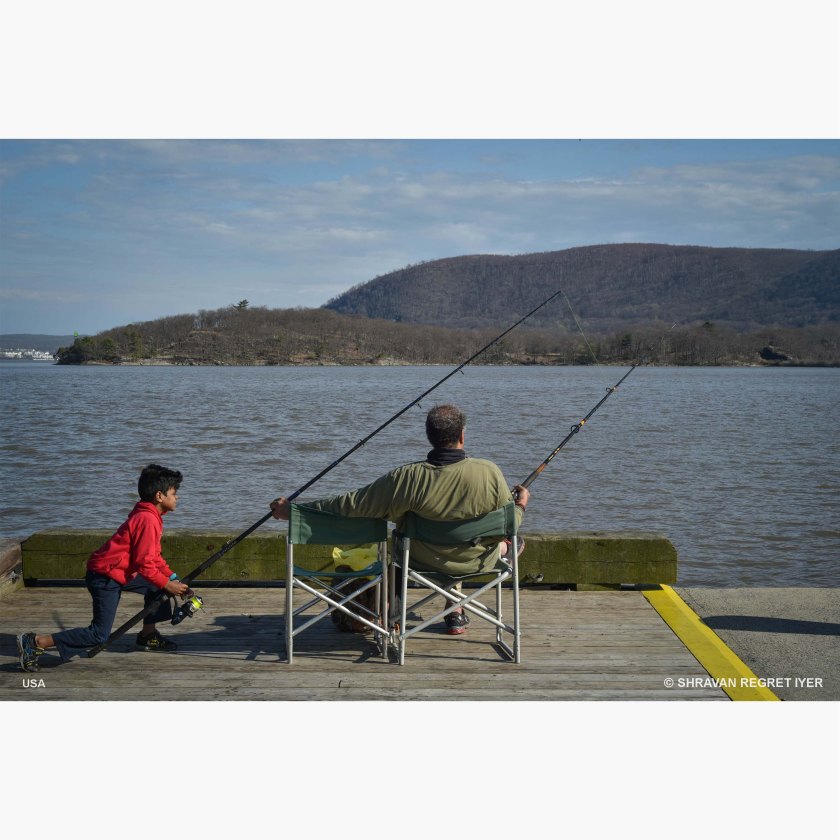
Fishing is one of the most popular outdoor recreational activities in the United States. Around 49 million Americans (of all ages) participated in freshwater, saltwater and fly fishing.
Since 1952, there has been an increase in the number of people participating in Catch and Release fishing in the USA. Angler fish for fun rather than for food. After capturing the fish they unhook and return the fish to the water. Recreational fishing is intended as a technique of conservation.
Catch and Release improves native fish population by allowing more fish to remain and reproduce in the ecosystem. Releasing native fish caught while in a National Park will help to ensure that enjoyment of this recreational opportunity will last for generations to come.
Join me Shravan Regret Iyer @shravanregretiyer3lenses and explore ‘This is America’
Also visit @regretiyerproductions@shravanregretiyer & shravanregretiyer.com for more immersive stories from the natural world.



USA_4750
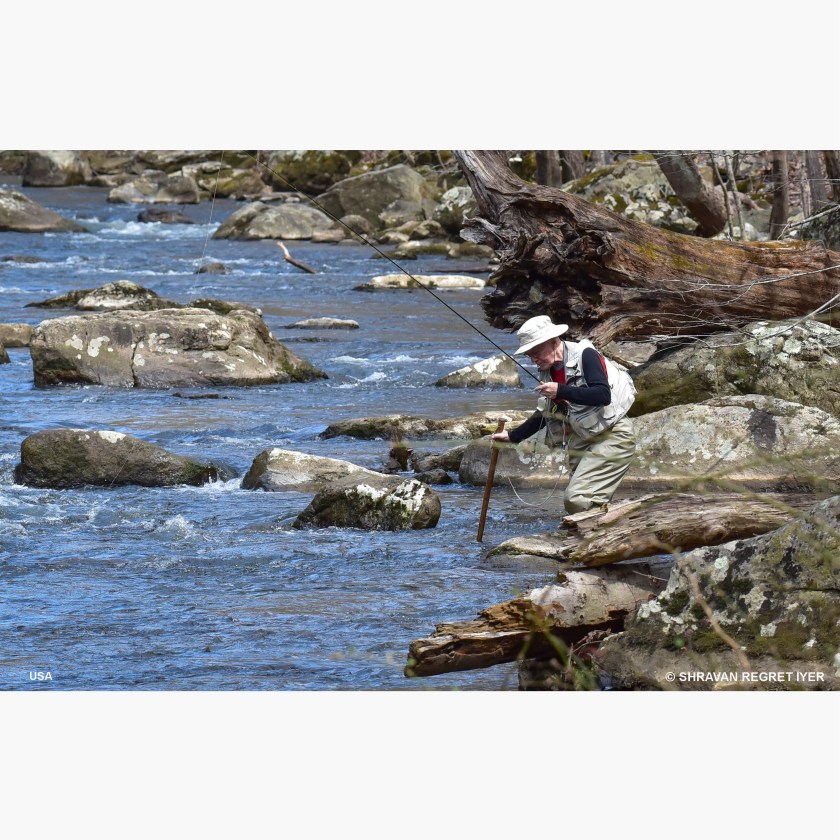
Fishing is one of the most popular outdoor recreational activities in the United States. Around 49 million Americans (of all ages) participated in freshwater, saltwater and fly fishing.
Since 1952, there has been an increase in the number of people participating in Catch and Release fishing in the USA. Angler fish for fun rather than for food. After capturing the fish they unhook and return the fish to the water. Recreational fishing is intended as a technique of conservation.
Catch and Release improves native fish population by allowing more fish to remain and reproduce in the ecosystem. Releasing native fish caught while in a National Park will help to ensure that enjoyment of this recreational opportunity will last for generations to come.
In the picture above, an angler holding a rainbow trout fish. The fish was later released into the water. Trout fish like these are important indicator of high water quality. The state of New Jersey has surprisingly abundance and variety of self-sustaining wild trout populations. Population of wild trout inhabit nearly 1000 miles of streams located in small, upland streams in the northern tier of the state.
Join me Shravan Regret Iyer @shravanregretiyer3lenses and explore ‘This is America’
Also visit @regretiyerproductions@shravanregretiyer & shravanregretiyer.com for more immersive stories from the natural world.


USA_4706
Fishing is one of the most popular outdoor recreational activities in the United States. Around 49 million Americans (of all ages) participated in freshwater, saltwater and fly fishing.
Since 1952, there has been an increase in the number of people participating in Catch and Release fishing in the USA. Angler fish for fun rather than for food. After capturing the fish they unhook and return the fish to the water. Recreational fishing is intended as a technique of conservation.
Catch and Release improves native fish population by allowing more fish to remain and reproduce in the ecosystem. Releasing native fish caught while in a National Park will help to ensure that enjoyment of this recreational opportunity will last for generations to come.
In the picture above, an angler holding a rainbow trout fish. The fish was later released into the water. Trout fish like these are important indicator of high water quality. The state of New Jersey has surprisingly abundance and variety of self-sustaining wild trout populations. Population of wild trout inhabit nearly 1000 miles of streams located in small, upland streams in the northern tier of the state.
Join me Shravan Regret Iyer @shravanregretiyer3lenses and explore ‘This is America’
Also visit @regretiyerproductions@shravanregretiyer & shravanregretiyer.com for more immersive stories from the natural world.


USA_4080
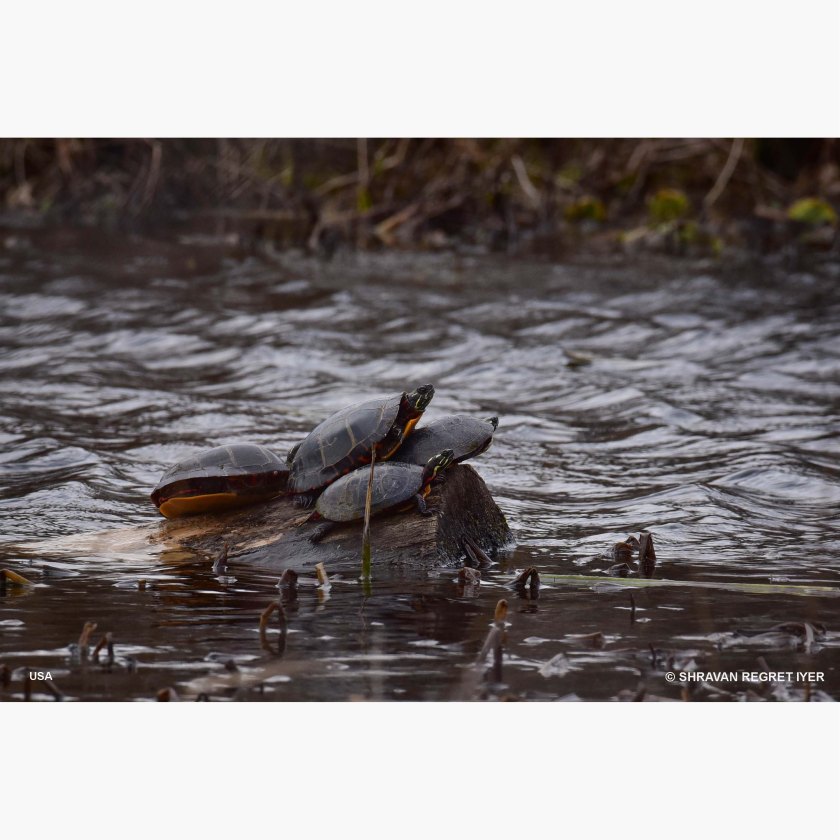
It’s Spring and the beginning of the warm weather — with temperature reaching around 80 degrees Fahrenheit. It’s exactly what these Eastern Painted Turtles we’re looking for after surviving the brutally cold winter by burying itself on the bottom of a body of water and hibernating from Oct till March.
These turtles are fond of basking on platforms or sloping log where they can get their entire bodies out of water. Basking helps these turtles increase the internal temperature and aiding in food digestion and maintaining a healthy immune system. All ages bask for warmth and share their space along side other species of turtles found here in the USA. Sometimes more than 50 individuals can be seen together on one log. They start the day at Sunrise and emerge from the water to bask for several hours and return to water to forage. They re-emerge for one to two more cycles of basking and feeding the same day. Underwater the turtles need to maintain a body temperature of 63-73 degrees Fahrenheit. While hibernating the body temperature of these turtles average around 43 degrees Fahrenheit.
Join me Shravan Regret Iyer @shravanregretiyer3lenses and explore ‘This is America’
Also visit @regretiyerproductions@shravanregretiyer & shravanregretiyer.com for more immersive stories from the natural world.


USA_4218
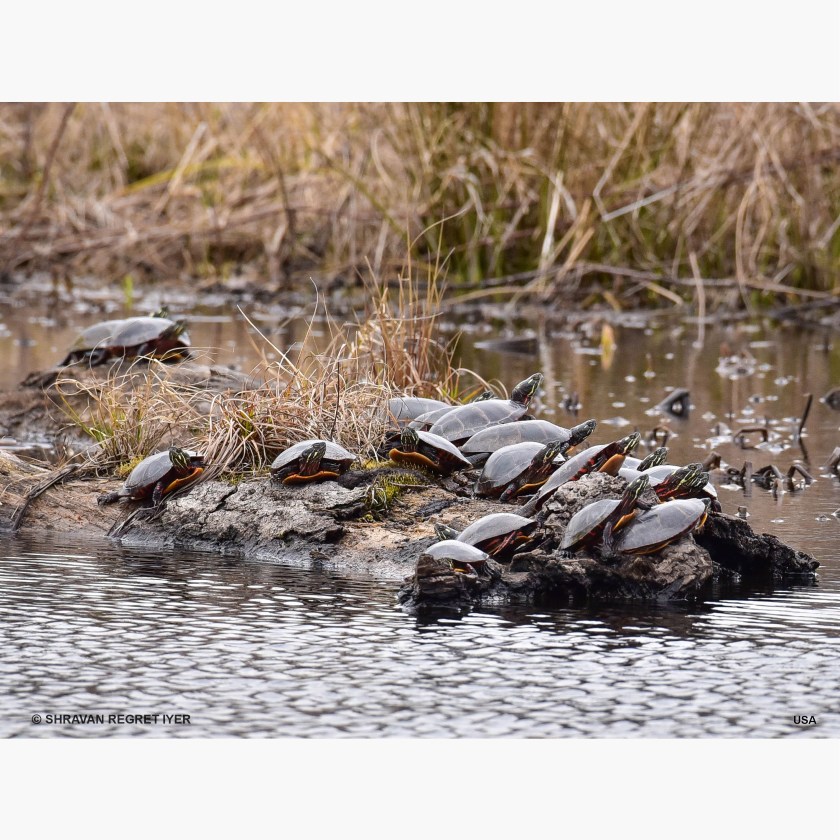
It’s Spring and the beginning of the warm weather — with temperature reaching around 80 degrees Fahrenheit. It’s exactly what these Eastern Painted Turtles we’re looking for after surviving the brutally cold winter by burying itself on the bottom of a body of water and hibernating from Oct till March.
These turtles are fond of basking on platforms or sloping log where they can get their entire bodies out of water. Basking helps these turtles increase the internal temperature and aiding in food digestion and maintaining a healthy immune system. All ages bask for warmth and share their space along side other species of turtles found here in the USA. Sometimes more than 50 individuals can be seen together on one log. They start the day at Sunrise and emerge from the water to bask for several hours and return to water to forage. They re-emerge for one to two more cycles of basking and feeding the same day. Underwater the turtles need to maintain a body temperature of 63-73 degrees Fahrenheit. While hibernating the body temperature of these turtles average around 43 degrees Fahrenheit.
Join me Shravan Regret Iyer @shravanregretiyer3lenses and explore ‘This is America’
Also visit @regretiyerproductions@shravanregretiyer & shravanregretiyer.com for more immersive stories from the natural world.


USA_6352
The Eastern Rat Snake or popularly known as the Black Rat Snake is the largest snake species found in New Jersey, USA. They are non-venomous snake and can grown upto 200cm (79in). The longest recorded total length to date is 256.5 cm (101.0 in). Adults are shiny black dorsally, with a cream or white chin and throat. They are primarily active at night during the summer, and diurnal in the spring and fall. They are terrestrial burrower and excellent climber, and may enter water. These snakes brumate in colder months. Brumation is similar to hibernation – it allows the snake to be mostly asleep, but still wake up for occasional activities, such as drinking water. The black rat snake’s population is considered stable. However, these snakes are often mistreated by humans who are frightened of them.
Join me Shravan Regret Iyer @shravanregretiyer3lenses and explore ‘This is America’
Also visit @regretiyerproductions@shravanregretiyer & shravanregretiyer.com for more immersive stories from the natural world.


USA_3677
Order in Nature Photo 3: Canada goose is the largest goose in the world. They communciate during their flights by honking and shifting positions during their flight in order to take turns. Canada geees fly at an average speed of 40 miles per hour and reach upto 70 miles with strong wind. They can cover upto 3000. There are about 4~5million Canada geese in North America.
Join me Shravan Regret Iyer @shravanregretiyer3lenses and explore ‘This is America’
Also visit @regretiyerproductions@shravanregretiyer & shravanregretiyer.com for more immersive stories from the natural world.


USA_7774
Order in Nature Photo 2: The natural world is full of order and regularity. It is very much visible with the bold patterns or dazzling colours that majority of the animals advertise – either to make one partner attractive to the other or to defence against the predator. But, then order can also be seen in the way animals behave.
Canada goose is the largest goose in the world. They fly in V-shaped formation which is considered to be more energy efficient particularly over long migratory routes and help in increase in flight range by 71%. In fact this type of V-formation is also used by military aircrafts while on flight missions. Canada geese communciate during their flights by honking and shifting positions during their flight in order to take turns.
They mate assortatively, larger birds choosing larger mates and smaller ones choosing smaller mates. They mate for life and have very low divorce rate. While the Female geese builds the nest, the male geese acts as a sentry watching the nest from a nearby location. On the ground the geese prefer a spot with fairly unobstructed view in all directions. Spacing of these pairs depends on the population density. When the population is large, the birds nest in view of one another.
The baby geese learn to swim in less than 24 hours after they are born and trained by their parents to dive 30-40 feet underwater by the time they are 1 day old. Soon they become more independent and groups of goslings join together to form gang broods of upto 100 goslings and learn to fly between 2-3 months of age.
Join me Shravan Regret Iyer @shravanregretiyer3lenses and explore ‘This is America’
Also visit @regretiyerproductions@shravanregretiyer & shravanregretiyer.com for more immersive stories from the natural world.


USA_0271
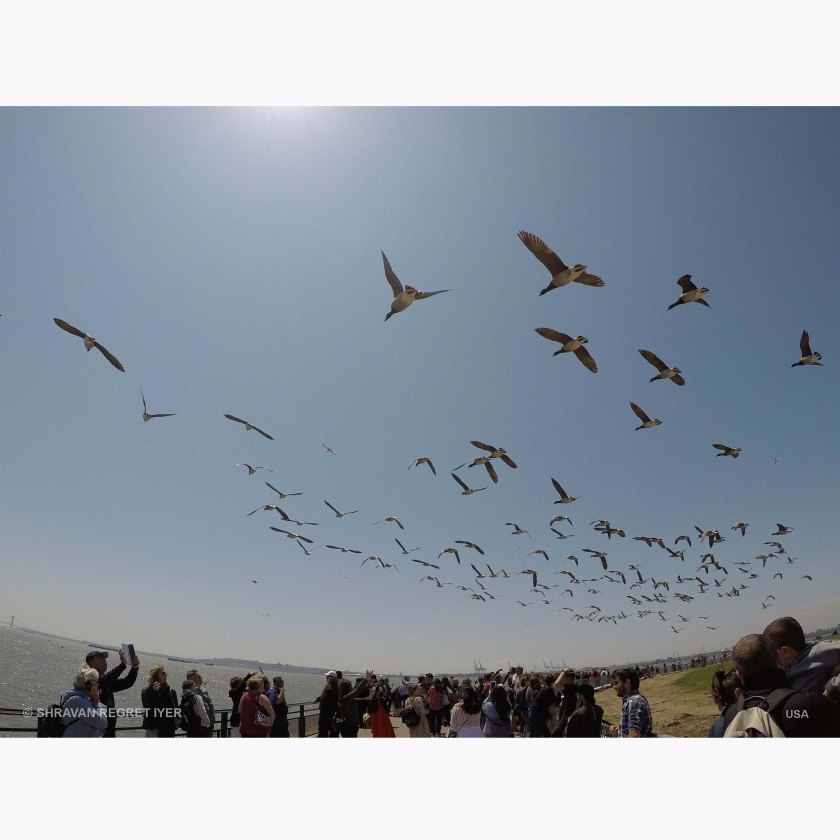
Order in Nature Photo 1: The natural world is full of order and regularity. It is very much visible with the bold patterns or dazzling colours that majority of the animals advertise – either to make one partner attractive to the other or to defence against the predator. But, then order can also be seen in the way animals behave.
Canada goose is the largest goose in the world. They fly in V-shaped formation which is considered to be more energy efficient particularly over long migratory routes and help in increase in flight range by 71%. In fact this type of V-formation is also used by military aircrafts while on flight missions. Canada geese communciate during their flights by honking and shifting positions during their flight in order to take turns.
They mate assortatively, larger birds choosing larger mates and smaller ones choosing smaller mates. They mate for life and have very low divorce rate. While the Female geese builds the nest, the male geese acts as a sentry watching the nest from a nearby location. On the ground the geese prefer a spot with fairly unobstructed view in all directions. Spacing of these pairs depends on the population density. When the population is large, the birds nest in view of one another.
The baby geese learn to swim in less than 24 hours after they are born and trained by their parents to dive 30-40 feet underwater by the time they are 1 day old. Soon they become more independent and groups of goslings join together to form gang broods of upto 100 goslings and learn to fly between 2-3 months of age.
Canada geees fly at an average speed of 40 miles per hour and reach upto 70 miles with strong wind. They can cover upto 3000. There are about 4~5million Canada geese in North America.
Join me Shravan Regret Iyer @shravanregretiyer3lenses and explore ‘This is America’


USA_7127
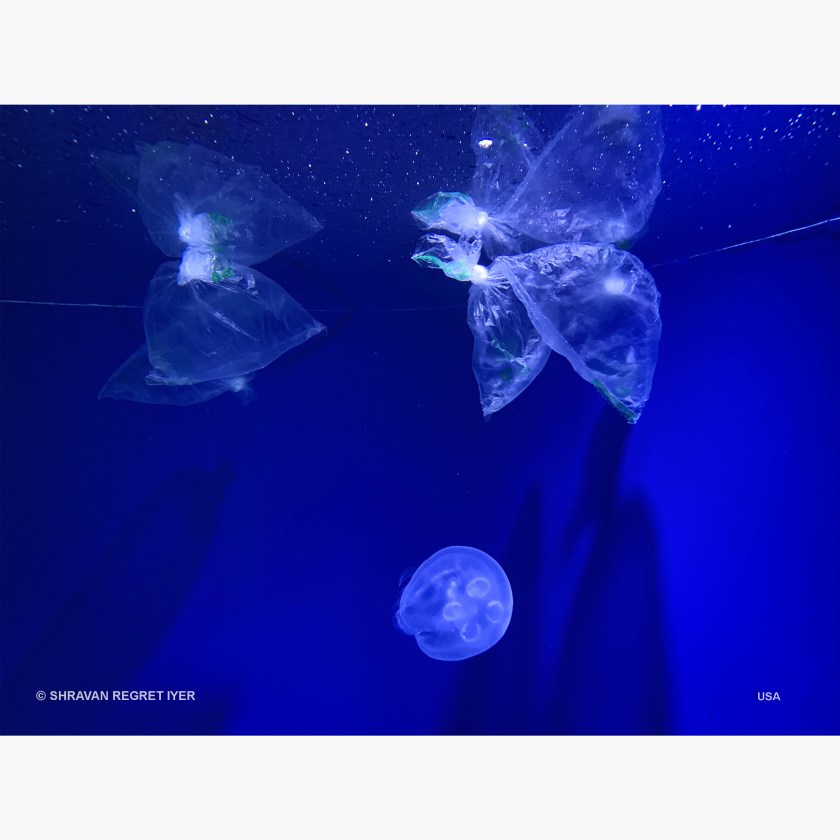
They both are translucent. While we as humans are able to identify plastic bags versus a moon jelly, marine species can’t. Plastic bags in the ocean are often mistaken by marine species like sea turtles for jellyfish. This causes blockages within their digestive system and eventually death! Not just that once in the ocean, plastic breaks down into tiny fragments known as micro plastic. These micro plastics are again mistaken by smaller organisms for food. We are only now realizing how big the problem is and scientists have already started seeing plastic in the tiniest organism to the animals on top of the food chain.
Humans produce over 300 million tons of plastic each year, a whooping 91% of plastic isn’t recycled. In the USA alone, around 102.1 billion plastic bags are used by Americans every year. More than 8 million tons of plastic is dumped into oceans. Millions of marine animals are killed from ingesting or becoming entangled in plastics.
We all have an obligation to do something to solve this growing problem. The least we can do is cut down the use of plastic and educate and inspire others to do the same.
Join me Shravan Regret Iyer @shravanregretiyer3lenses and explore ‘This is America’. Visit @shravanregretiyer@regretiyerproductions and https://shravanregretiyer.com for more immersive stories.